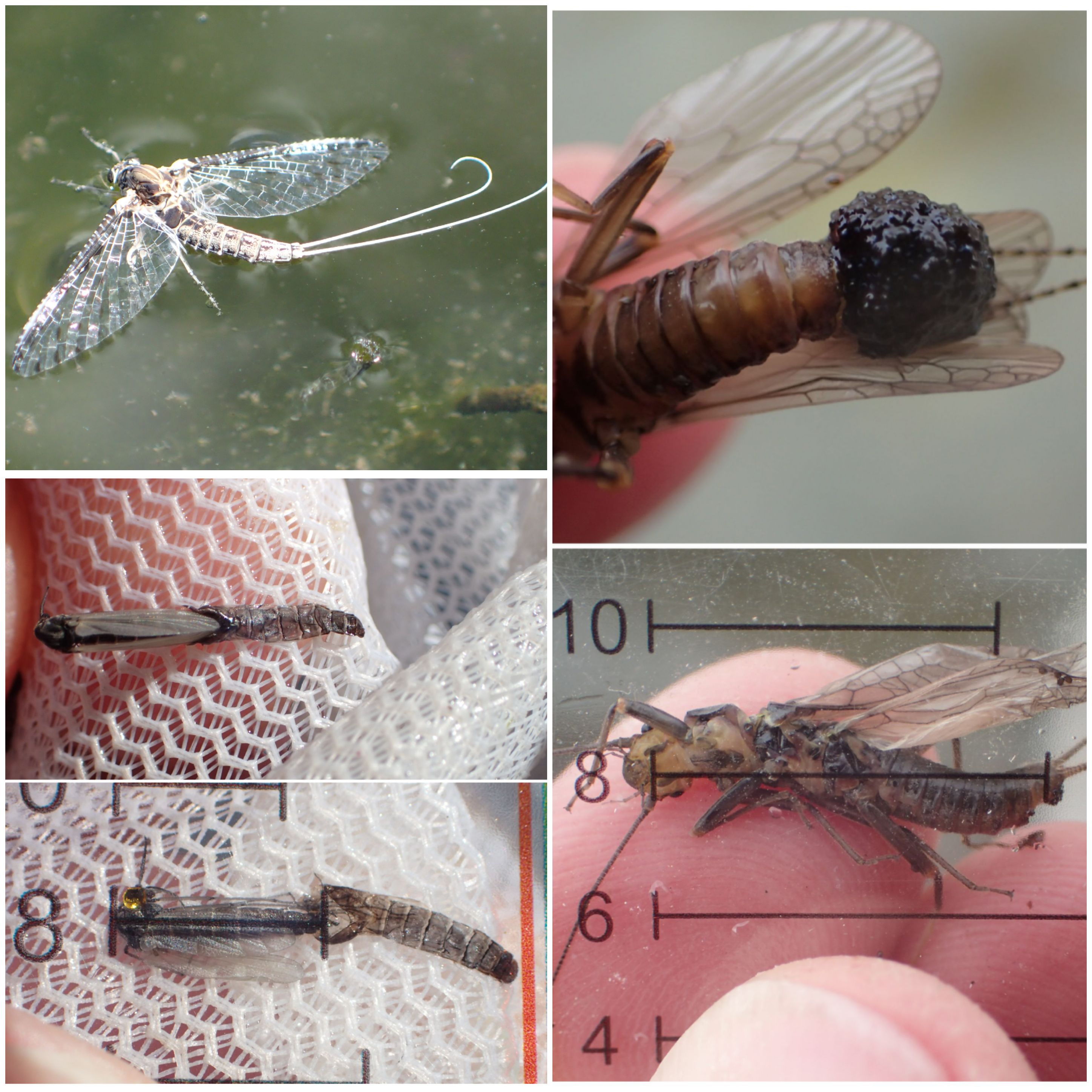
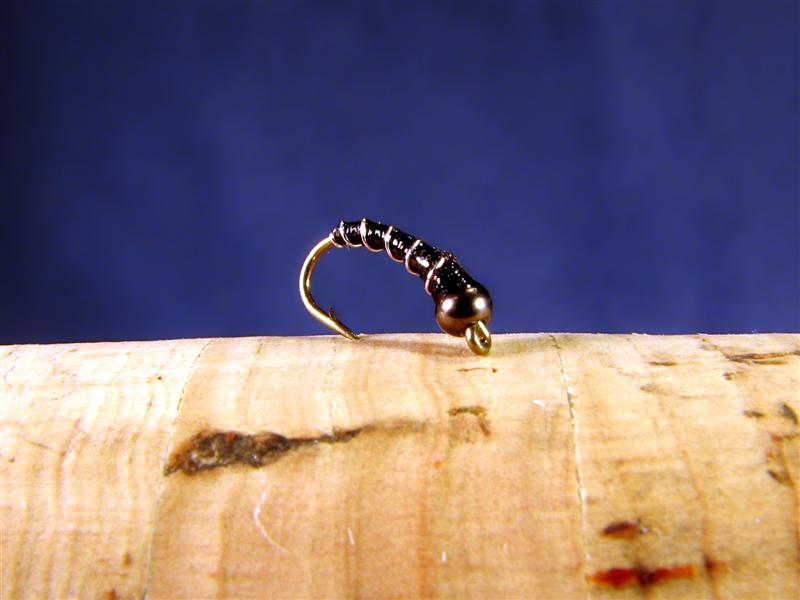
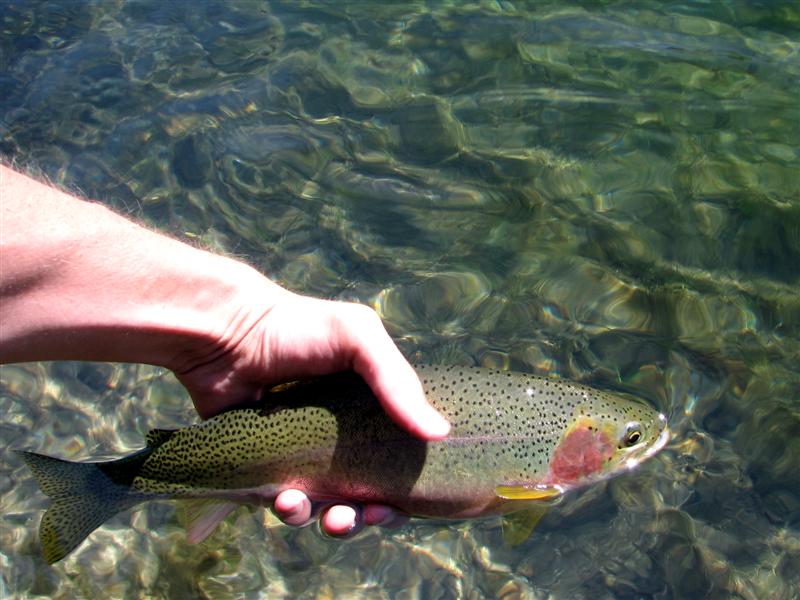
When you get to the river, how do you decide what fly to use? Often anglers use a “lucky fly” or the fly that worked the last time they were out. And while that works sometimes, here are some tips that will up your odds of picking a fly that will catch more trout.
Fish Swami now has a mobile app to help you get more out of your fishing trips! The app allows you to log your fishing trips while you're out on the water, even if you're out of cell service. GPS tracks are automatically created while you fish, so it's easy to see where you fished and where you caught fish. Any fishing logs you enter in the app will be synched with the Fish Swami site, so you can also view those same logs on your computer. The mobile app is available for iOS and Android phones.
Often when we are analyzing our fishing results, we are looking for patterns or conditions that correlate with overall fishing success.
That success is defined by the total number of fish we catch and the rate that we're able to catch them. Fish Swami's
Fishing Log Empirical Analysis System (FLEAS) allows anglers
to search for patterns and correlations in their fishing logs, giving them results in the form of total number of fish caught and average
fish size (among other things).
A new feature has been added to Fish Swami to help make entering in fishing logs even easier. With the help of USGS streamflow data, Fish Swami can auto-populate the water level and water temperature fields when you add a new fishing log entry.
In case you haven't noticed, Fish Swami has received a significant update in the past few weeks! The site has been redesigned but still supports the same capabilities the old site provided. This week, the Fishing Log Empirical Analysis System was ported to the new site from the old site, providing users with a powerful tool to analyze their fishing log data for patterns.
In the coming weeks, I plan on adding a few smaller features to the site that I've wanted to work on for quite some time. I'll blog about these new features as I add support for them. As always, if you have ideas about how to improve the site, please send Fish Swami a message.
While using the new site, if you see an errors, please use the Contact Page to send me a note detailing what the issue is.
Fish Swami is about to receive a major upgrade! I have been working on a light refresh of the UI/graphics for the site, but I have also redesigning most of its back-end to support future expansion of Fish Swami to mobile apps. The goal is to be able to record fishing logs on your phone while you're out fishing, and have those logs sync automatically with Fish Swami when you're back in cell range.
It's taking awhile, but the updated website changes for Fish Swami will be live early this spring. I'll post updates as I get closer to the release date....
A great new feature added to Fish Swami in 2008 was the fishing log report summary page. Fish Swami graphs a handful of common statistics on one page to show how many fish were caught each month, what the top fish catching patterns were, etc. The summary page is updated as each fishing log report is added, and previous year’s summaries can also be viewed. I used the summary page this year to determine my fly of the year for 2008.
Fish Swami had its 1,000th user register today! The online fishing log has been growing steadily, mostly through word-of-mouth and other fishing sites linking to site.
My goal is to continue adding fishing log related features to the site to help ease entering in fishing log information as well as to help glean information from your fishing logs. I would also like to expand the general fishing related information the site offers to anglers.
Since starting to collect statistics for the site's traffic back in March 2007, the site has had almost 19,000 unique visitors and 150,000 page views. My thanks to those who visit the site.
It was already 8pm by the time I finally had my pack strapped on at the trailhead. The sun was low in the sky and the air was brisk. The hike was going to take longer than the sun would light my path. As long as I was able to get close to my destination mountain lake before complete darkness, my headlamp could help me the rest of the way.
Any time fish are rising at a mountain lake, spirits rise. Whenever you fish a new place in the mountains, unless you have solid reports from someone else who has fished the place recently, you never really know if you're going to find fish or not. The sub-alpine weather, short growing season, and lack of rich insect life in mountain lakes make life difficult. So when I arrived at the lake and saw occasional splashy disturbances in the lake's silvery-blue reflection of the dusk sky, my hopes for the weekend's fishing rose.
My alarm blared at 3AM and I rolled out of bed, stumbled into the kitchen and made some coffee, filled the thermos and jumped in the truck. A quick stop at a fishing buddy’s house and we were off to fish the Grande Ronde river.
As we drove through the darkness we chatted about where we caught steelhead last weekend, what runs we were going to fish and what flies we were going to use. Our excitement grew as we got closer to the river in anticipation of a good day of fishing. It was still dark as we wound our way down Rattlesnake Grade towards Boggans Oasis. We got to the river at first light and jumped out to check conditions and were horrified to find that the river was completely blown out! Our hearts sank and we knew it was not going to be a good day. We stayed and fished, but with no luck. The water was just too high and chocolate brown.
That was the day when I decided I needed to learn more about water gauges and hydrographs. Over the last 14 years I have learned how to identify some important river conditions using hydrographs that have increased my success as a steelhead fisherman. Here are some conditions every steelheader should know and what their corresponding hydrographs look like.